
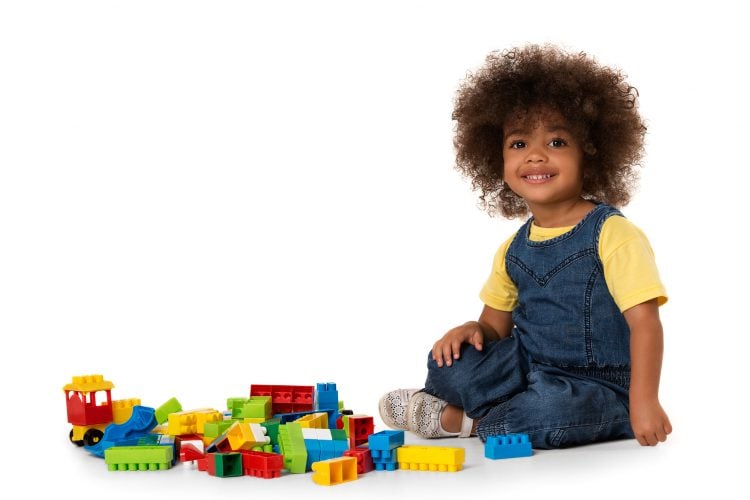
Play with Purpose: Gift Ideas that Inspire Learning, Growth, & Connection
The holiday season is here, and with it comes excitement of finding the perfect gifts for the little ones in our lives! With so many toys to choose from, shopping can feel overwhelming. What if the best gifts could bring joy while also supporting growth and development?
At More to Say, we believe that play is the most powerful way children learn, explore, communicate, and connect with the world around them.
Our Occupational Therapists (OTs) and Speech-Language Pathologists (SLPs) have created a gift guide featuring toys that encourage skill-building through play. From hands-on building toys to interactive games, these gift ideas offer opportunities for fun, creativity, and meaningful developmental growth!
1. Building Blocks and Magnetic Tiles
Great for: Fine motor coordination, creativity, visual motor integration, problem-solving, and language development
Building toys offer endless possibilities for little imaginations! Children can practice grasping, stacking, and connecting pieces while exploring shapes, colors, and spatial concepts.
MEGA BLOKS
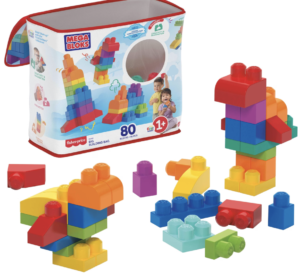
Skills supported: Hand strength, bilateral coordination, problem-solving, imaginative play
Why we love it: These larger building blocks are great for little hands and encourage children to practice connecting, stacking, and creating while developing early play skills.
Magnetic Tiles
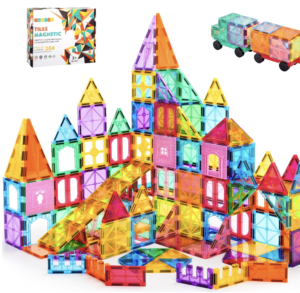
Skills supported: Fine motor coordination, visual motor integration, spatial awareness, pretend play
Why we love it: Magna-tiles encourage open-ended play, allowing children to build, explore, and experiment with different shapes and structures.
Therapist Tip: Build something together! Take turns adding pieces, describe what you’re creating, and introduce words like “tall,” “under,” “more,” “on top,” and “up”.
2. Pretend Play Sets
Great for: imaginative play, vocabulary, social communication, sequencing, coordination, life skills
Pretend play allows children to explore familiar routines, navigate social interactions, and express their creativity. Whether they’re running an ice cream shop or playing doctor, these toys create endless opportunities for communication and connection.
Ice Cream Counter Toy
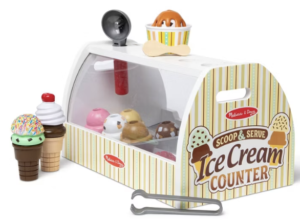
Skills supported: Fine motor coordination, requesting, sequencing, and social communication
Why we love it: Children can practice taking orders, scooping, and serving customers while building vocabulary and engaging in back-and-forth conversations.
Vet Play Set
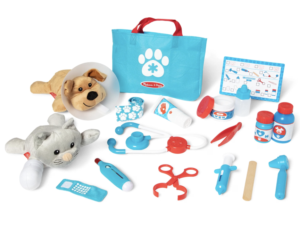
Skills supported: Imaginative play, vocabulary, sequencing, emotional regulation, and social interactions
Why we love it: Pretend play kits like veterinarian or doctor kits encourage children to act out familiar experiences, practice caring for others, and learn new vocabulary related to daily routines.
Therapist Tip: Follow your child’s lead! Model simple phrases like “What would you like?” “Your turn!” “Please,” “Thank you,” and “All done,” to encourage conversation without making play feel like work.
3. Play Dough & Sensory Play Kits
Great for: Hand strength, fine motor coordination, sensory exploration, regulation, and play skills
Squishing, rolling, pinching, and shaping manipulatives like play doh are all ways for children to explore different textures while strengthening the small muscles in their hands.
Play-Doh Starter Kit
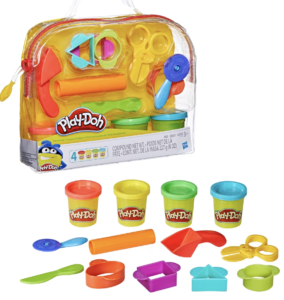
Skills supported: Hand strength, fine motor coordination, sensory exploration, and play skills
Why we love it: Play-Doh encourages hands-on exploration through squeezing, rolling, flattening, and cutting while allowing children to create whatever they imagine.
Sensory Bins
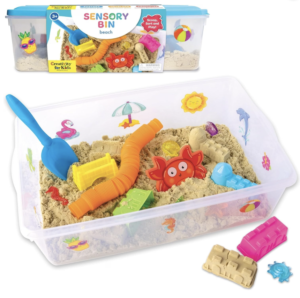
Skills supported: Fine motor coordination, sensory exploration, regulation, and play skills
Why we love it: Sensory bins encourage fine motor exploration through child-friendly tools as well as support regulation throughout the day.
Therapist Tip: Hide small, age-appropriate objects in play dough or sensory bins for your child to find, or challenge them to roll, pinch, and shape different creations. Describe textures using words like “soft,” “sticky,” “smooth,” and “squishy.” Model action words like “roll,” “pinch,” “dig,” and “scoop”.
4. Puzzles & Matching Games
Great for: visual perception, problem-solving, fine motor coordination, attention, and vocabulary
Puzzles and matching games encourage children to recognize patterns, identify similarities, and work through challenges. They are also great opportunities for language development and building confidence.
Beginner Puzzles
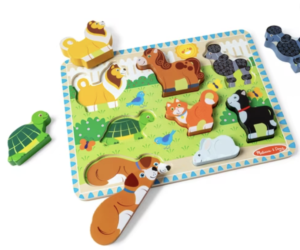
Skills supported: Visual motor integration, matching, fine motor coordination, and vocabulary
Why we love it: Chunky puzzle pieces are easy for little hands to grasp and provide opportunities to practice matching pictures, naming animals (or other objects, depending on puzzle theme!), and developing early problem-solving skills.
Zingo!
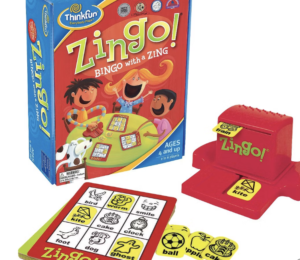
Skills supported: Vocabulary, visual discrimination, attention, turn taking
Why we love it: This interactive matching game encourages children to recognize pictures, name objects, and practice waiting and taking turns.
Therapist Tip: Instead of immediately showing your child where a puzzle piece goes, offer clues and encouragement. During matching games, talk about the pictures and ask questions like “What do you see?” or “Where does this one go?” You can also model social phrases such as, “Your turn!” “My turn!” and “Good game!”
5. Interactive Books
Great for: Language development, early literacy, attention, comprehension, and connection
Books make wonderful gifts at any age! Interactive stories with flaps, textures, repetitive phrases, and colorful illustrations encourage children to participate in reading while developing important communication skills.
Hello Genius Books
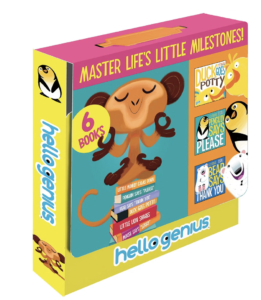
Skills supported: Emotional regulation, social participation, self-care and life skills, vocabulary
Why we love it: Hello Genius books provide young children simple and engaging stories on important concepts related to emotional regulation, social participation, and self-care tasks.
Interactive Flap Books such as “Where’s Spot?”

Skills supported: Early language, spatial concepts, receptive language, and vocabulary
Why we love it: Children can lift flaps to search for Spot while practicing words like “under,” “behind,” and “inside.” The predictable story encourages participation and playful interaction.
Therapist Tip: You don’t have to read every word. Pause to let your child fill in familiar phrases, point to pictures, make silly sounds, and ask questions. Even simply talking about illustrations can create meaningful language-learning opportunities.
6. Movement & Balance Toys
Great for: Gross motor coordination, balance, body awareness, motor planning, and following directions
For children who love to move, active play toys can provide exciting opportunities to build coordination, explore movement, and develop confidence in their physical abilities.
Stepping Stones
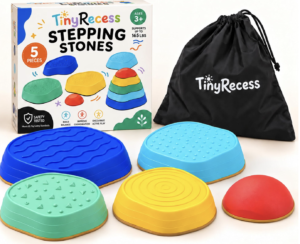
Skills supported: Balance, coordination, body awareness, and motor planning
Why we love it: Stepping stones encourage children to practice navigating different distances and heights while building balance and confidence through movement.
Tunnel
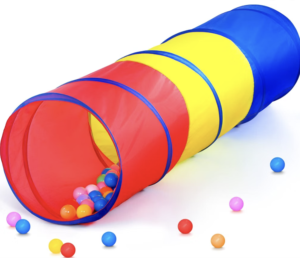
Skills supported: Gross motor coordination, core strength, body awareness, motor planning, and spatial concepts
Why we love it: A play tunnel encourages children to crawl, explore, and move their body in new ways! Crawling through a tunnel provides opportunities to build shoulder and core strength, coordination, and body awareness while encouraging imaginative play. It’s also a fun way to introduce spatial concepts like “in” and “out.”
Therapist Tip: Create an obstacle course by pairing the tunnel with stepping stones, pillows, or other household items. Encourage your child to crawl through, step over, and move around obstacles while practicing following directions. You can even hide favorite toys or puzzle pieces at the other end to add excitement and encourage communication!
7. Interactive & Turn-Taking Games
Great for: Social communication, turn-taking, following directions, emotional regulation, and problem-solving
Games are a wonderful way to bring the family together while practicing important developmental skills. They encourage children to wait, take turns, follow rules, and navigate the excitement (and occasional frustration!) of playing with others.
Pop the Pig
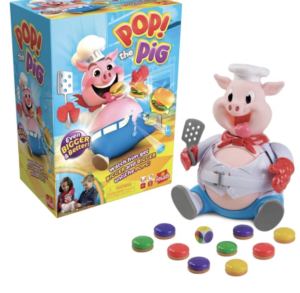
Skills supported: Turn-taking, counting, color recognition, following directions, and emotional regulation
Why we love it: Players take turns feeding the pig colorful hamburgers and watching his belly grow until it pops! The anticipation makes practicing patience, waiting, and following rules especially engaging.
Banana Blast
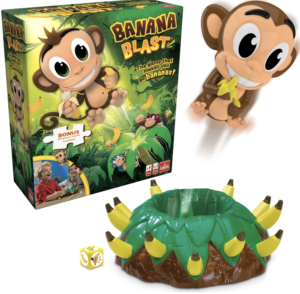
Skills supported: Turn-taking, attention, eye-hand coordination, following directions, and emotional regulation
Why we love it: This exciting game creates opportunities to practice waiting, responding to unexpected outcomes, and sharing a fun experience with other players.
Therapist Tip: Make game time a communication opportunity! Model phrases like “My turn!” “Your turn!” “What happens next?” and “Let’s try again!” Remember, the goal isn’t just winning. It’s having fun, connecting with others, and learning through play.
A Message From More to Say
When choosing toys this holiday season, remember that the most valuable part of play isn’t always the toy itself. It’s the connection and interaction that happen along the way.
You don’t need the newest, most expensive, or most elaborate toy to support your child’s development. Simple toys that encourage creativity, exploration, and interaction can provide wonderful opportunities for learning.
Every child develops at their own pace and has unique interests and strengths. Choose toys that meet your child where they are, spark their curiosity, and most importantly, bring them joy.
As you shop, remember to check age recommendations, small-parts warnings, and supervision requirements to make sure each toy is appropriate for your child.