

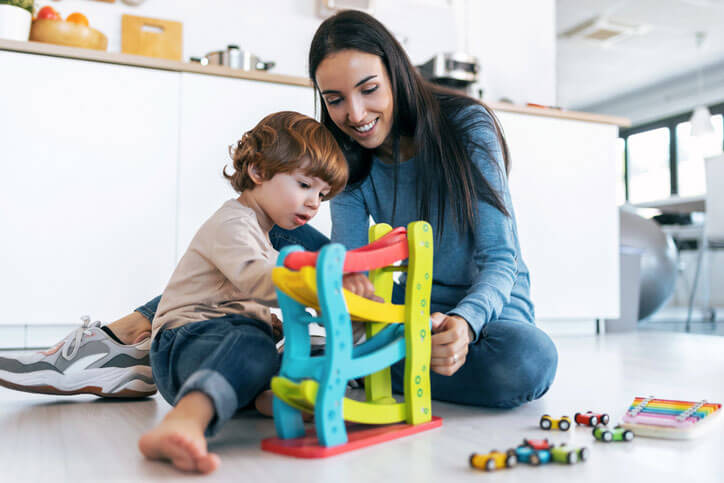
The first three years of life are a time of incredible growth. Children are learning how to move their bodies, communicate their needs, interact with others, and explore foods. While development varies slightly between children, there are times when extra support is beneficial to set up a strong foundation for future skills. Pediatric therapy services such as occupational, speech & language, and feeding therapy can provide guidance when a child is having difficulties in a certain area, feels frustrated, or is not meeting milestones as expected. Early support means that you are helping your child build important skills during a critical window of development.
—–
Occupational Therapy: Movement, Play, Sensory, and Daily Routines
Occupational therapy supports a child’s ability to participate in everyday activities such as play, self-care, movement, and more. Parents may consider seeking support if they notice their child has challenges in:
- Early motor milestones such as rolling, crawling, standing, or walking
- Using their hands to grasp toys, feed themselves, or explore objects
- Showing interest in developmentally-appropriate toys
- Tolerating sound, texture, or movement inputs
- Maintaining regulation and safety due to movement-seeking behaviors
- Transitions, flexibility, or calming their body with adult support
At home, families can support OT-related skills through everyday play and routines. Floor play encourages strength and coordination, while activities like crawling, climbing, dancing, and outdoor play help children build body awareness and confidence. Offering toys that promote problem solving and hand use, such as blocks and puzzles, can support fine motor development. Allowing children to actively participate in dressing, feeding, and cleaning up (without rushing or expecting perfection), helps build independence. Sensory play with water, sand, play dough, or textured books allows children to actively explore their tactile system.
Speech & Language Therapy: Understanding and Using Communication
Speech and language therapy helps children learn how to understand language, express themselves, and engage socially. Support may be helpful if a child:
- Has limited babbling, vocal play, or use of gestures (examples: pointing, reaching up if wanting to be picked up, baby signs)
- Has difficulty understanding simple directions
- Uses few or no words by 15-18 months
- Is not combining words by age 2
- Becomes easily frustrated due to difficulty communicating
Families can support communication at home by talking throughout the day, describing routines, and labeling what their child sees and does. Reading books together, even briefly, builds vocabulary and joint attention. Following a child’s lead during play, pausing to allow time for responses, and modeling words naturally (without pressure to repeat), can make communication feel enjoyable and successful. Singing songs and engaging in playful interactions further strengthen early language skills.

Feeding Therapy: Building Positive Mealtime Experiences
Feeding therapy focuses on helping children eat safely, comfortably, and confidently. Parents should seek support if they notice:
- Difficulty with sucking, chewing, or transitioning between feeding stages
- Gagging, coughing, or choking during meals
- Strong aversions to certain textures, temperatures, or flavors
- Very limited food variety or refusal of entire food groups
- Mealtimes that feel stressful, prolonged, or emotional
At home, supportive feeding strategies focus on routine and connection. Offering regular meal and snack times helps children know what to expect, while presenting new foods alongside familiar ones encourages exploration without pressure. Allowing children to touch, smell, and play with food supports comfort and curiosity. Eating together as a family and modeling enjoyment of a variety of foods can also positively influence feeding skills. Most importantly, respecting hunger and fullness cues helps build trust and confidence around eating.

—–
Don’t Wait and See
You do not need to wait until concerns feel severe to reach out for help. Our pediatric therapists at More to Say are trained to evaluate different areas of development, provide guidance, and offer individualized care plans and strategies for families. Early support can reduce frustration, build confidence, and help children develop the skills they need to play, communicate, and participate fully in daily life.
If you have questions about your child’s development or would like guidance on how to support them during these important early years, a pediatric therapy evaluation is a valuable first step. Early support lays the foundation for long-term success, and you don’t have to navigate it alone. Call us to schedule an evaluation at our Branford or Oxford, CT clinic at (203)828-6790.